



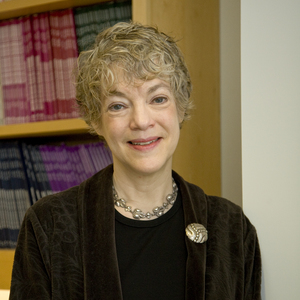

Susan T. Fiske
Professor Fiske's research addresses how stereotyping, prejudice, and discrimination are encouraged or discouraged by social relationships, such as cooperation, competition, and power. The research begins with the premise that people easily categorize other people, especially based on race, gender, age, and class. Going beyond such categories, to learn about the individual person, requires motivation. Social relationships supply one form of motivation to individuate, and the work shows that being on the same team or depending on another person makes people go beyond stereotypes. Conversely, people in power are less motivated to go beyond their stereotypes. Laboratory studies examine how a variety of relationships affect people forming impressions of others.
Society's cultural stereotypes and prejudice also depend on relationships of power and interdependence. Group status and competition affect how groups are (dis)liked and (dis)respected. Surveys examine the content of group stereotypes based on race, gender, age, (dis)ability, income, and more, finding patterns in the ways that society views various groups. Her lab has also uses the tools of social neuroscience to search for neural signatures of particular prejudices and to examine power relations. And the lab has pioneered some computational modeling.
Fiske is EmerIta Eugene Higgins Professor, Psychology and Professor of Public Affairs, Princeton University (Ph.D., Harvard University; honorary doctorates, Université catholique de Louvain-la-Neuve, Belgium; Universiteit Leiden, Netherlands). She finished a fifth edition of Social Cognition (1984, 1991, 2008, 2013, each with Taylor and 2025,as sole author) on how people make sense of each other. She has written more than 400 articles and chapters, as well as editing many books and journal special issues. Notably, she edits the Annual Review of Psychology (with Schacter) and the Handbook of Social Psychology (with Gilbert, Finkel, & Mendes, 6e, 2025, open access). She also wrote an upper-level integrative text, Social Beings: Core Motives in Social Psychology (2004, 2010) and edited Beyond Common Sense: Psychological Science in the Courtroom (2008, with Borgida). Her Russell-Sage and Guggenheim-funded book, Envy Up, Scorn Down: How Status Divides Us (2011).
Her work on emotional prejudices (pity, contempt, envy, and pride) at cultural, interpersonal, and neural levels, has been funded by the Russell Sage Foundation (2008-2011), the National Science Foundation (1984-1986, 1995-1997) and the National Institutes of Health (1986-1995). Her expert testimony in discrimination cases was cited by the U.S. Supreme Court in a 1989 landmark decision on gender bias. In 1998, she also testified before President Clinton’s Race Initiative Advisory Board, and in 2001-03, she co-authored a National Academy of Science report on Methods for Measuring Discrimination. In 2004, she published a Science article explaining how ordinary people can torture enemy prisoners, through processes of prejudice and social influence.
Fiske has been elected to the National Academy of Sciences, the American Academy of Arts and Sciences, and the American Philosophical Society. She was awarded British Academy Corresponding Fellow, American Academy of Political and Social Sciences Gordon W. Allport Fellow, the 2010 APA Distinguished Scientific Contributions Award, the 2010 Society for Personality and Social Psychology Donald T. Campbell Award, a 2009 Guggenheim Fellowship, and the 2009 William James Fellow Award from the Association for Psychological Science. Previously, she won the American Psychological Association’s Early Career Award for Distinguished Contributions to Psychology in the Public Interest for anti-discrimination testimony and the Society for the Psychological Study of Social Issues’ Allport Intergroup Relations Award for ambivalent sexism theory (with Glick), as well as Harvard’s Graduate Centennial Medal.
She has served on several professional nonprofit boards, and she was elected President of the Federation of Associations in Behavioral and Brain Sciences, President of the Association for Psychological Science, President of the Foundation for the Advancement of Behavioral and Brain Sciences, and President of the Society for Personality and Social Psychology. Her graduate students conspired for her to win Princeton’s graduate mentoring award in 2009. She is grateful to them and to all her generous colleagues for these recognitions that all in fact reflect collaborative work.
Her expert witness work has familiarized her with workplace discrimination in settings from shipyards and assembly lines to international investment firms, and she has served on diversity committees in several nonprofit settings. She grew up in Chicago’s Hyde Park, a stable, racially integrated community and still wonders why the rest of the world does not work that way.
Primary Interests:
- Culture and Ethnicity
- Gender Psychology
- Intergroup Relations
- Interpersonal Processes
- Law and Public Policy
- Motivation, Goal Setting
- Neuroscience, Psychophysiology
- Person Perception
- Prejudice and Stereotyping
- Social Cognition
Research Group or Laboratory:
Note from the Network: The holder of this profile has certified having all necessary rights, licenses, and authorization to post the files listed below. Visitors are welcome to copy or use any files for noncommercial or journalistic purposes provided they credit the profile holder and cite this page as the source.
Image Gallery





Video Gallery

The HUMAN Brand: How Did You Discover the Importance of Warmth and Competence?
Select video to watch
-
2:05 The HUMAN Brand: How Did You Discover the Importance of Warmth and Competence?
Length: 2:05
-
7:27 Stereotyping and Prejudice (Brainwaves Video Anthology)
Length: 7:27
-
53:54 Varieties of (De)Humanizing: Divided by Status and Competition
Length: 53:54
-
40:06 Ambivalent Stereotypes Support Inequality and Conflict—or Peace
Length: 40:06
-
8:34 Diversity Science: The Impact of Group Processes
Length: 8:34
-
2:16 What Can Warmth and Competence Teach Us About Class?
Length: 2:16
-
59:31 Inclusive Leadership, Stereotyping, and the Brain
Length: 59:31
-
19:36 European Association of Work and Organizational Psychology Interview
Length: 19:36
-
33:10 21st Century Diversity: We Are Not Stuck With Stereotypes
Length: 33:10
-
36:54 How Ordinary People Become Violent: Frustration and Dehumanization
Length: 36:54
-
12:57 What's at Stake? (National Academies of Science Colloquium)
Length: 12:57
-
10:52 Harnessing Scientific Curiosity for Driving Research Integrity
Length: 10:52
-
30:40 Social Categorization, Stereotypes, Prejudice, and Discrimination
Length: 30:40
-
24:29 Agents of Cultural Behavior Change
Length: 24:29
-
23:20 Research Methods Blogs: Exploring Who Posts What About Whom
Length: 23:20
-
13:21 Doctoral Hooding Ceremony Speech (Teachers College)
Length: 13:21
Additional Videos
Data Files
-
Group Means, Student Sample: JPSP (2002)
- Linked publication: Fiske, S. T., Cuddy, A. J., Glick, P., & Xu, J. (2002). A model of (often mixed) stereotype content: Competence and warmth respectively follow from perceived status and competition. Journal of Personality and Social Psychology, 82, 878-902.
-
Group Means, Non-Student Sample: JPSP (2002)
- Linked publication: Fiske, S. T., Cuddy, A. J., Glick, P., & Xu, J. (2002). A model of (often mixed) stereotype content: Competence and warmth respectively follow from perceived status and competition. Journal of Personality and Social Psychology, 82, 878-902.
Books:
- Borgida, E., & Fiske, S. T. (Eds.). (2008). Beyond common sense: Psychological science in the courtroom. London: Wiley-Blackwell.
- Eberhardt, J., & Fiske, S. T. (1998). Confronting racism: The problem and the response. London: Sage Publications
- Fiske, S. T. (2011). Envy up, scorn down: How status divides us. New York: Russell Sage Foundation.
- Fiske, S. T. (2025). Social cognition: From brains to culture (5th ed.). Thousand Oaks, CA: SAGE Publications.
- Fiske, S. T. (2018). Social beings: Core motives in social psychology (4th ed.). Hoboken, NJ: Wiley.
- Fiske, S. T., & Macrae, C. N. (Eds.). (2012). The SAGE handbook of social cognition. Los Angeles: SAGE Publications.
- Fiske, S. T., & Markus, H. M. (Eds.). (2012). Facing social class: How societal rank influences interaction. New York: Russell Sage Foundation.
- Fiske, S. T., & Schacter, D. L. (Eds.). (2005-2025). Annual Review of Psychology (Vols. 56-77). Palo Alto, California: Annual Review, Inc.
- Gilbert, D. T., Fiske, S. T., Finkel, E. J., & Mendes, W. B. (Eds.). (2025). The handbook of social psychology (6th ed.). Situational Press.
- Malone, C., & Fiske, S. T. (2013). The human brand: How we relate to people, products, and companies. San Francisco, CA: Jossey-Bass.
- Todorov, A., Fiske, S. T., & Prentice, D. (2011). Social neuroscience: Toward understanding the underpinnings of the social mind. New York: Oxford University Press.
Journal Articles:
-
Fiske, S. T., Cuddy, A. J., Glick, P., & Xu, J. (2002). A model of (often mixed) stereotype content: Competence and warmth respectively follow from perceived status and competition. Journal of Personality and Social Psychology, 82, 878-902.
- Linked data: Group Means, Student Sample: JPSP (2002)
- Linked data: Group Means, Non-Student Sample: JPSP (2002)
- Glick, P., & Fiske, S. T. (1996). The Ambivalent Sexism Inventory: Differentiating hostile and benevolent sexism. Journal of Personality and Social Psychology, 70, 491-512. [Winner, Gordon Allport Intergroup Relations Award, Society for the Psychological Study of Social Issues, 1995]
Courses Taught:
- Introductory Social Psychology
- Psychology of Racism
Susan T. Fiske
United States of America
